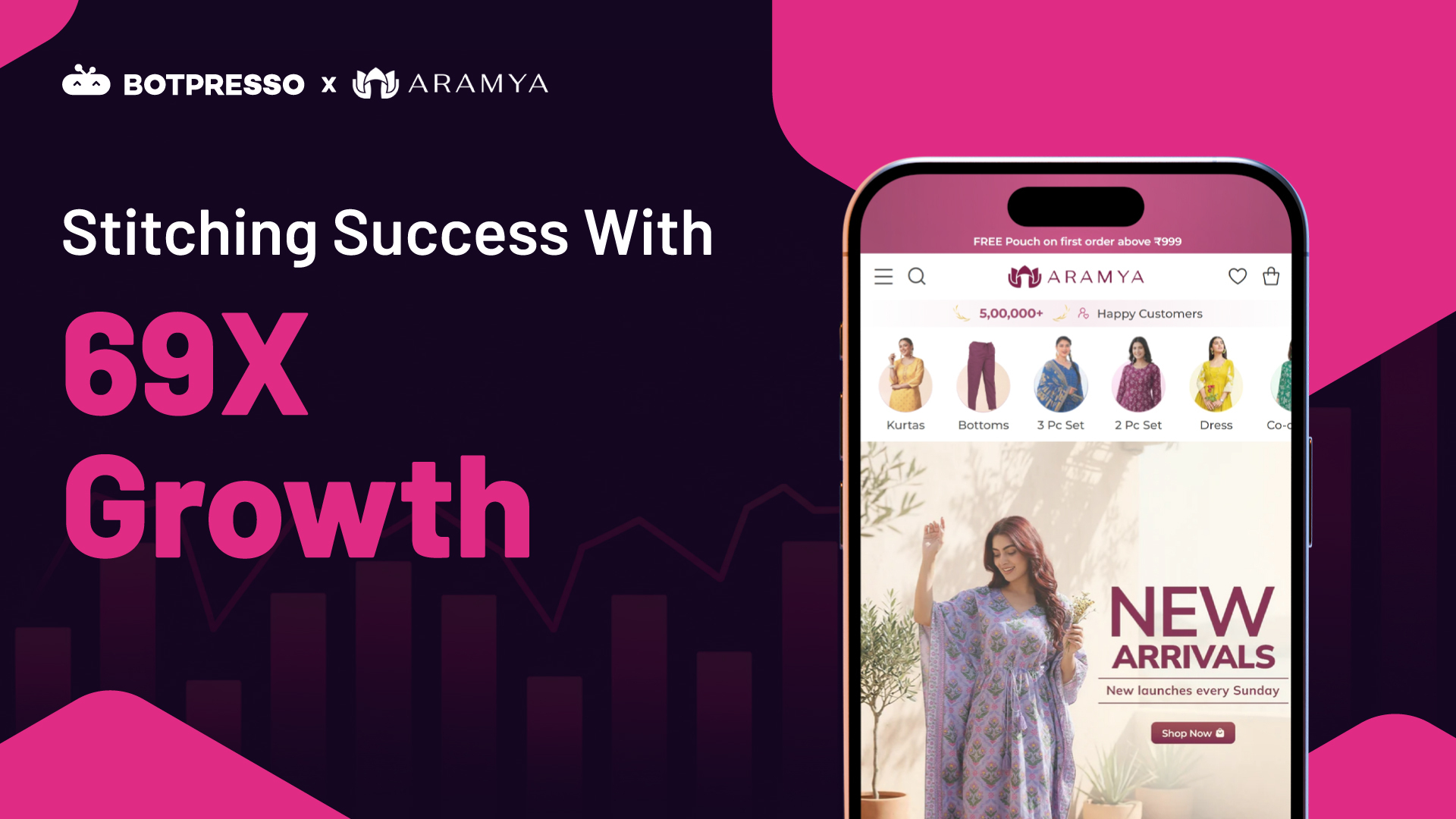
In under a year, Botpresso took Aramya from 201 to 13,950 non-branded organic clicks a month: a 69X jump. We did it on a headless React + Shopify site that Google could barely crawl, with a tight budget and a small dev team.
Organic revenue doubled along the way, and top-10 keyword rankings grew from 69 to 1,957.
| Metric | Growth | Before → After |
|---|---|---|
| Non-branded clicks | 69X | 201 → 13,950 / month |
| Organic sessions | +553% | 16,281 → 106,378 / month |
| Organic purchases | +233% | ~900 → ~3,000 / month |
| Top-10 keywords | 28X | 69 → 1,957 keywords |
Campaign Objectives
Aramya approached us with minimal organic search presence. Despite operating in a competitive market, it was generating only 59 non-branded clicks a month.
The brief was clear:
- 01Establish authority in its category.
- 02Drive sustainable growth through organic search.
- 03Boost sales.
The Challenges We Faced
This was not a “fix a few tags” project. Five problems stood between Aramya and page one.
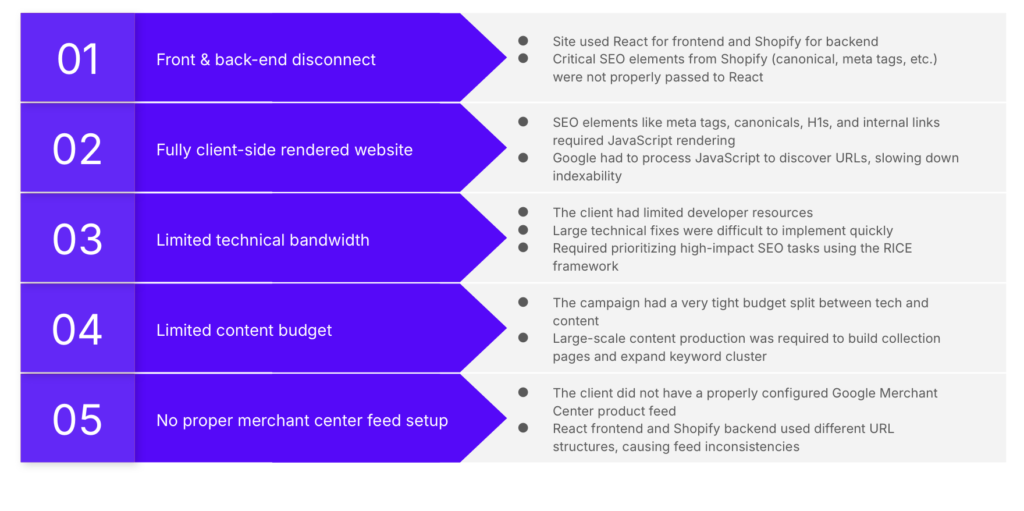
- 01Front and back-end disconnect. The site ran React on the front and Shopify on the back. Critical SEO elements from Shopify, like canonicals and meta tags, were not passed through to React.
- 02A fully client-side rendered site. Meta tags, canonicals, H1s and internal links all needed JavaScript to render. Google had to process JS just to discover URLs, which slowed indexing to a crawl.
- 03Limited technical bandwidth. Developer time was scarce, so large fixes were hard to ship quickly. Every task had to earn its place.
- 04A limited content budget. The budget was split thin between tech and content, yet the plan needed content at scale to build collection pages and expand keyword clusters.
- 05No proper Merchant Center feed. The Google Merchant Center feed was not set up correctly, and the React/Shopify URL mismatch made it inconsistent.
The Strategy Behind the Growth
Building a Scalable Content Process
The campaign needed large-scale content to build collection pages and expand keyword clusters, on a tight budget. So we built a scalable content process: keyword research and clustering up front, GPT for briefs and content creation, and manual curation before publishing.
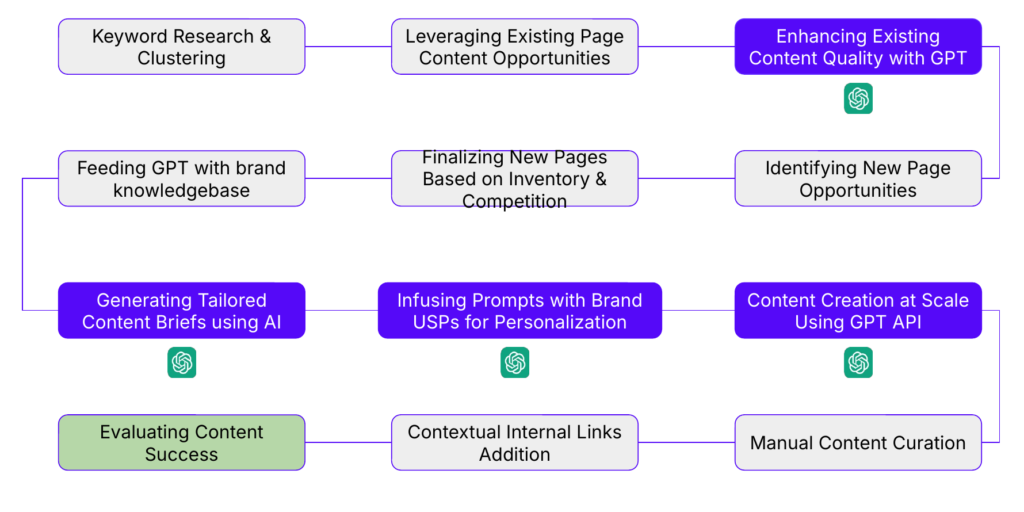
We fed GPT a brand knowledge base and infused prompts with Aramya’s brand USPs for personalization. Content then went through contextual internal link addition, manual curation and an evaluation of content success.
Scaling Crawl Coverage (31X More Pages Crawled)
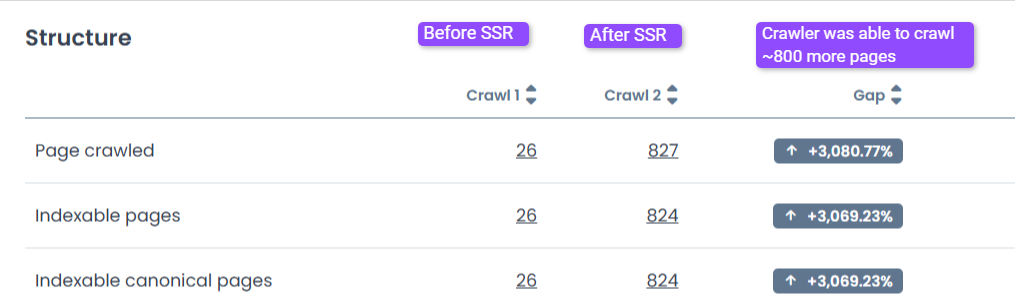
Google could only crawl 26 pages before our fix. After SSRing at least the basic and important SEO elements, the crawler reached 824 indexable URLs.
Implementations
- Implemented server-side rendering via Next.js
- Added contextual linking across collection pages
- Created both XML and HTML sitemaps to support discovery
Expanding Our Keyword Universe
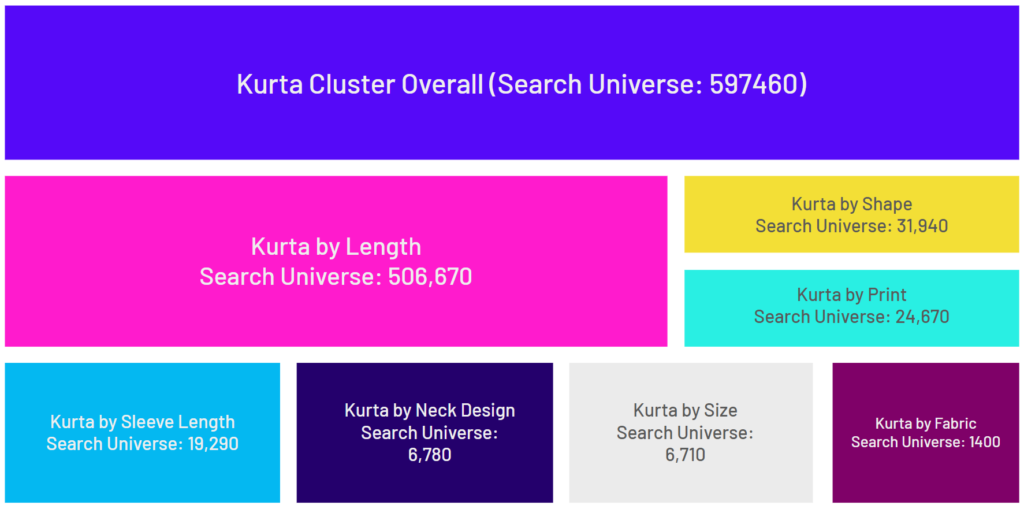
The kurta cluster alone holds a search universe of nearly 600,000. We broke it down by length, shape, print, sleeve, neck design, size and fabric.
Implementations
- Picked the clusters most relevant to the business, and prioritized quick wins given how big the sites ranking at the top were.
- Built targeted pages with clear SERP intent to capture traffic from low-hanging clusters.
Scaling Supporting Pages to Capture More Search Demand
We built supporting content around styling and design topics, such as how to style a kurti and kurti neck and sleeve designs. Organic clicks grew from 22 to 5,359 a month.
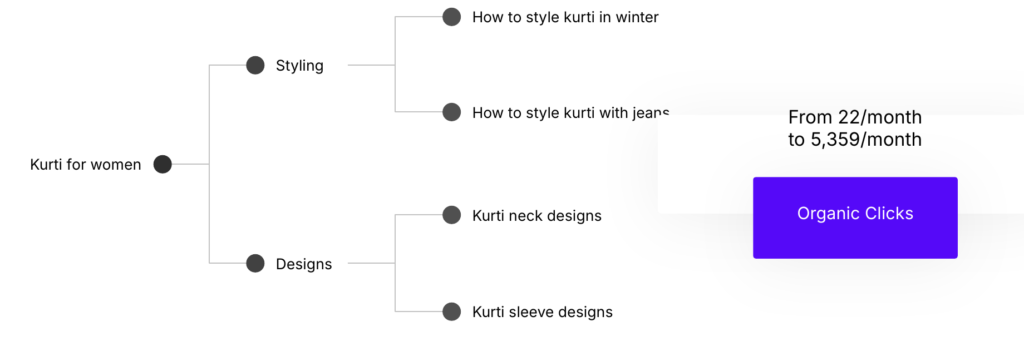
Implementation: We identified and published supporting topics that strengthen topical authority and drive extra targeted traffic.
Turning Strategy into Execution
Fixing Duplicate Metadata at Scale
The site had 1,209 duplicate meta titles. A templated approach, built from product attributes like colour, print, shape and material, took that to zero.
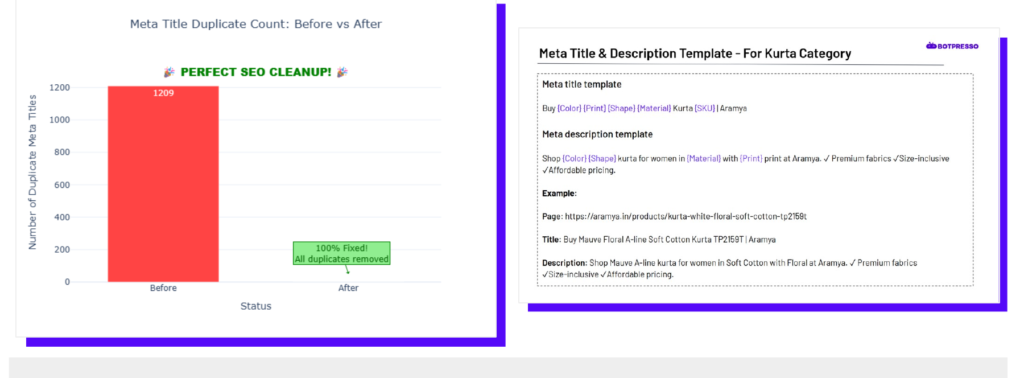
Implementation: We used templates to align meta tags with search intent and remove duplicates.
Fixing URL Mismatch and Optimizing the Merchant Feed
The frontend used /product/ for product pages, while Shopify used its default /products/. That mismatch broke the Merchant Center feed.
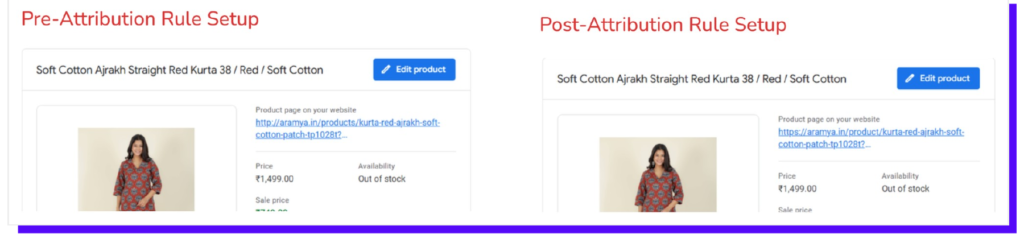
Implementation: We used Attribution Rules to rewrite the URL slug in the feed. Then we:
- Cleaned up the feed
- Optimized product titles and descriptions
- Added more images per product
- Mapped products to proper categories and attributes
- Integrated Google Customer Reviews to collect ratings
Prioritizing High-Impact SEO Initiatives
Aramya had “just” started scaling, so developer hours were precious. We scored every initiative with the RICE framework and shipped what gave the most impact for the least effort first.
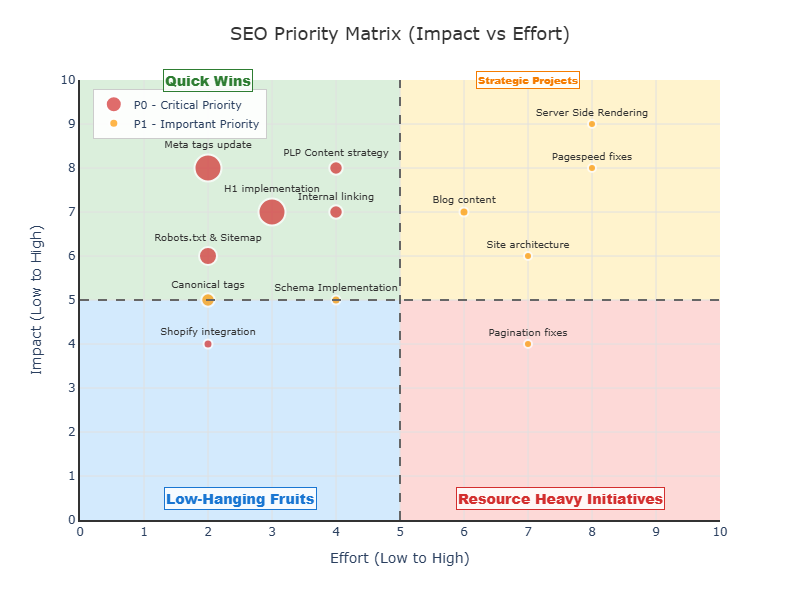
The matrix placed meta tag updates, H1 implementation, internal linking, PLP content strategy, and robots.txt and sitemap fixes among the quick wins. Server-side rendering sat among the strategic projects.
Using LLMs to Accelerate SEO Execution
We used LLMs to speed up both the tech implementation and the publishing cadence.
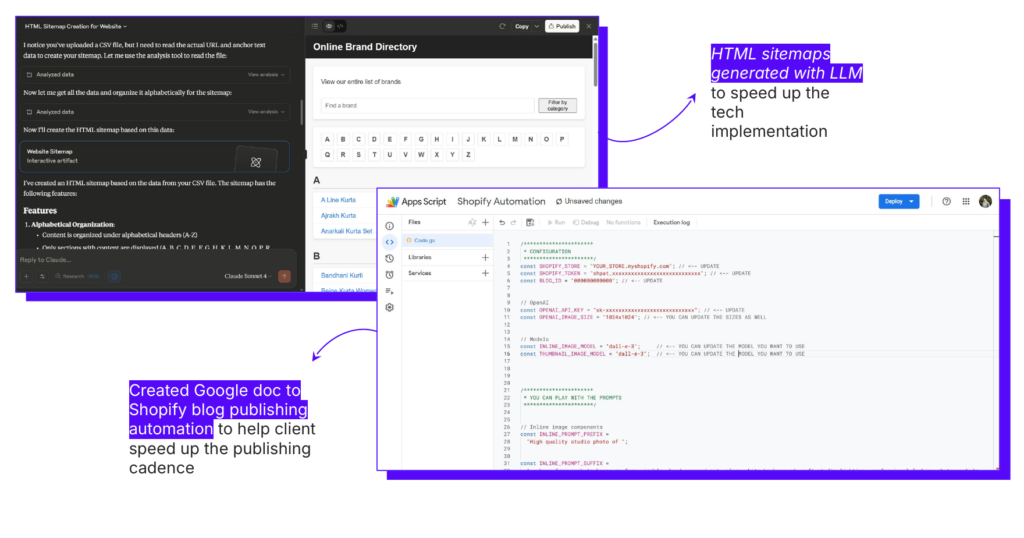
- HTML sitemaps generated with an LLM sped up the tech implementation.
- A Google Doc to Shopify blog publishing automation helped the client publish faster and more often.
Results and Impact
Breaking into SERPs Dominated by E-com Giants
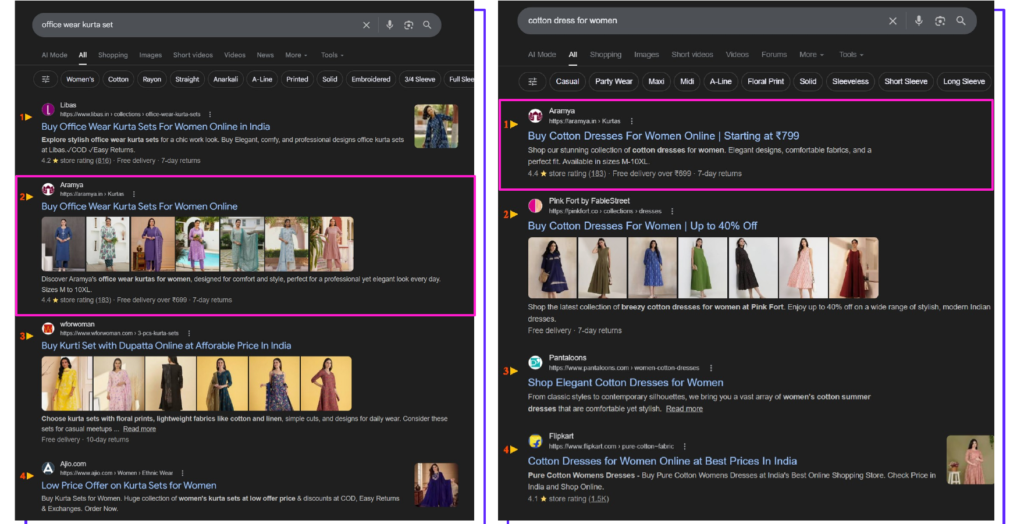
Aramya started appearing in SERPs dominated by e-commerce giants, for searches like “office wear kurta set” and “cotton dress for women”.
Turning Search Visibility into User Growth
Between February 2025 and January 2026, every visibility metric moved sharply up and to the right.
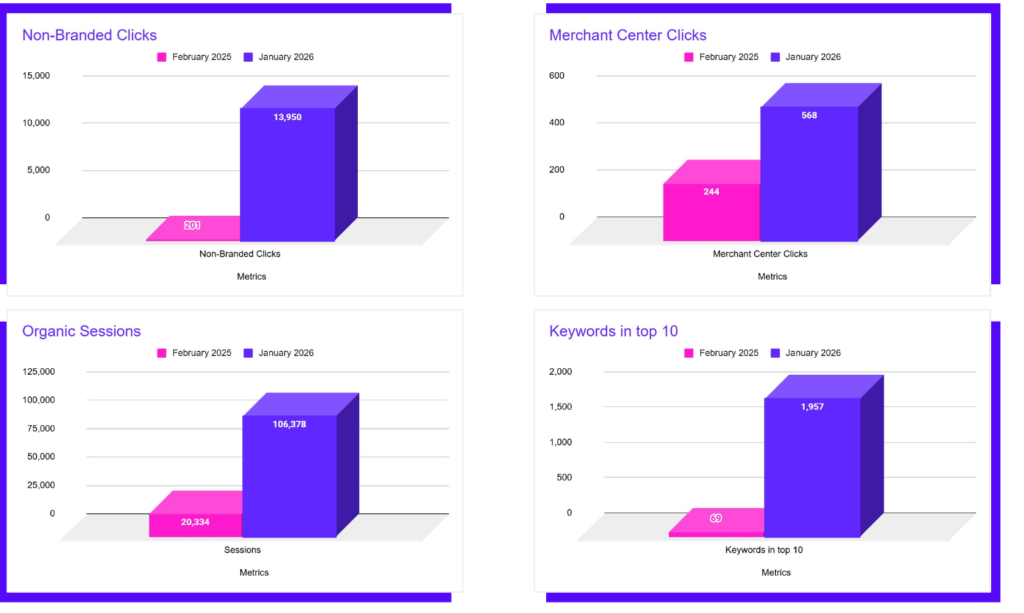
- Non-branded clicks: 201 to 13,950 a month (69X)
- Merchant Center clicks: 244 to 568 a month (2.3X)
- Organic sessions: 16,281 to 106,378 a month (+553%)
- Keywords in the top 10: 69 to 1,957 (28X)
Turning Organic Growth into Revenue
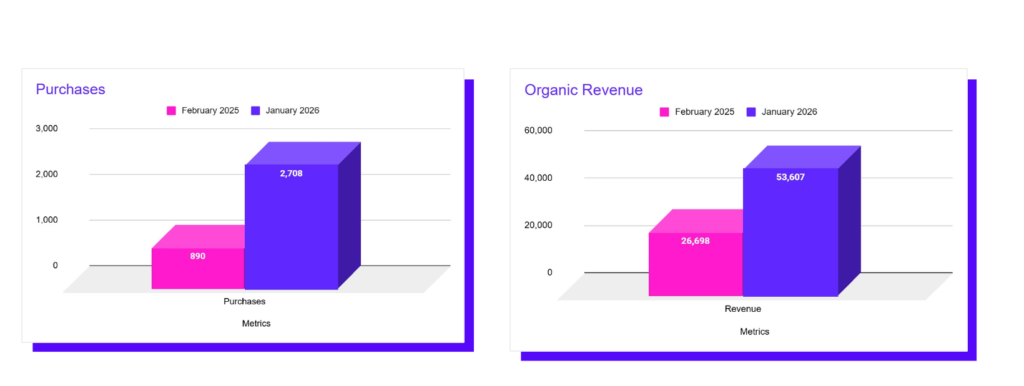
Organic purchases grew from about 900 to about 3,000 a month (+233%), and organic revenue grew by 100%.
Here’s What Our Client Says
We’ve been working with Botpresso for nearly a year now. They helped us build SEO from scratch, from technical foundations to content creation around relevant keywords. This has improved our overall visibility and discovery across the funnel.
What sets them apart is their detailed approach to recommendations, along with proactive and consistent communication throughout.
Prashant Hirwani, Founding Team, Aramya
Why This Campaign Stands Out
Aramya had a complex headless architecture, limited dev bandwidth and a modest budget. We still delivered exceptional business outcomes through three key factors.
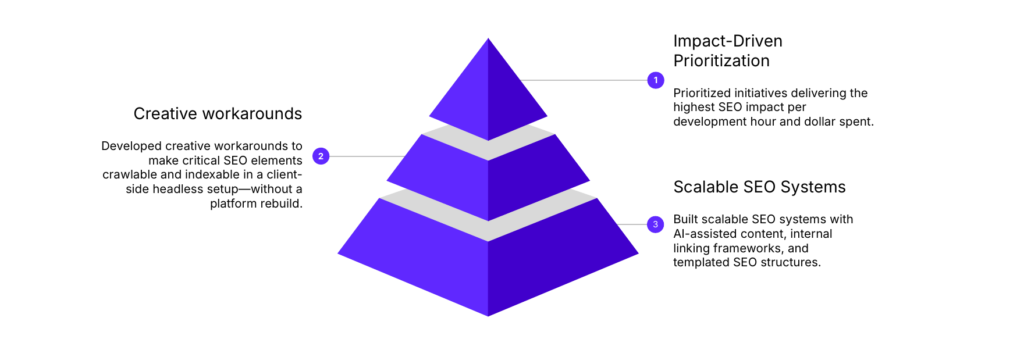
- 01Impact-driven prioritization. We shipped the initiatives with the highest SEO impact per development hour and dollar spent.
- 02Creative workarounds. We made critical SEO elements crawlable and indexable on a client-side headless setup, without a platform rebuild.
- 03Scalable SEO systems. We built scalable SEO systems with AI-assisted content, internal linking frameworks and templated SEO structures.
The impact speaks for itself: 6,840% growth in non-branded organic traffic, top-10 rankings up from 69 to 1,957 keywords, and organic revenue up 100%.
Running an e-commerce brand that search engines can’t quite see yet? Let’s talk →