The AEO vs. SEO debate has raged ever since users began turning to answer engines like ChatGPT and Perplexity, in addition to search engines like Google and Bing. While Google still owns 56.3% of total digital queries, ChatGPT is slowly weaving its way in with 18.7%.
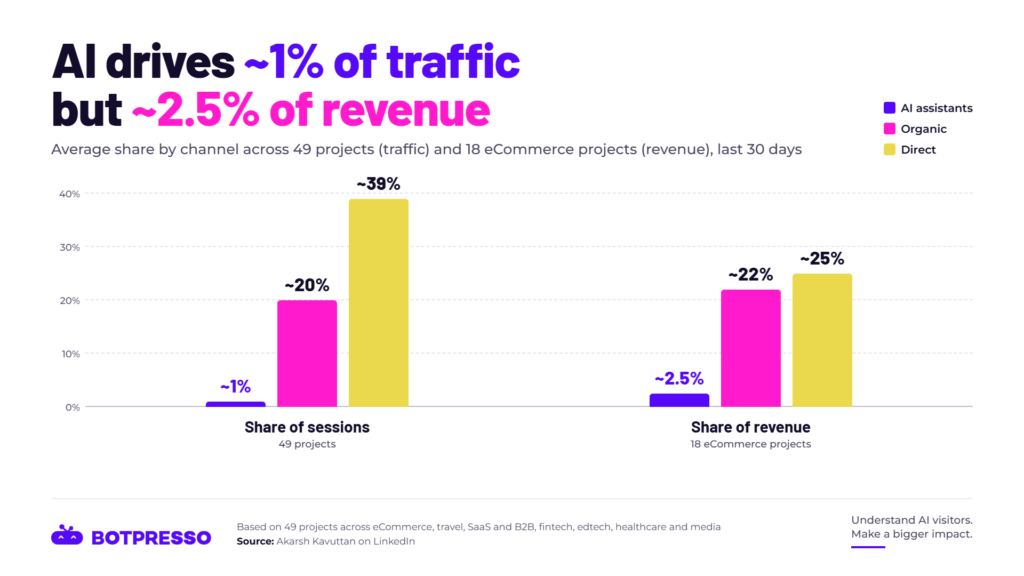
A recent Botpresso analysis led by our SEO Director, Akarsh Kavuttan, looked at 49 client websites over 30 days. AI assistants drove only about 1% of sessions but around 2.5% of eCommerce revenue, and smaller niche brands saw AI bring in as much as 16% of their revenue. Takeaway? AI search is still a small channel, but it is already driving real business results, which means it can’t be treated as an afterthought to SEO.
It’s more important now than ever for brands to not just win on search engine results pages but also in AI citations. Understanding the core differences and many similarities between AEO and SEO is the first step for brands.
We (Botpresso) are an AI-native SEO and GEO agency that builds ROI-driven organic marketing strategies. We make your brand visible in AI search by leading the way in SEO, GEO, Content Strategy, Digital PR and Reddit Marketing.
In this guide, we highlight what’s similar and what’s distinct between SEO and AEO/GEO. We also share Botpresso’s framework for building an effective SEO and AEO strategy in 2026.
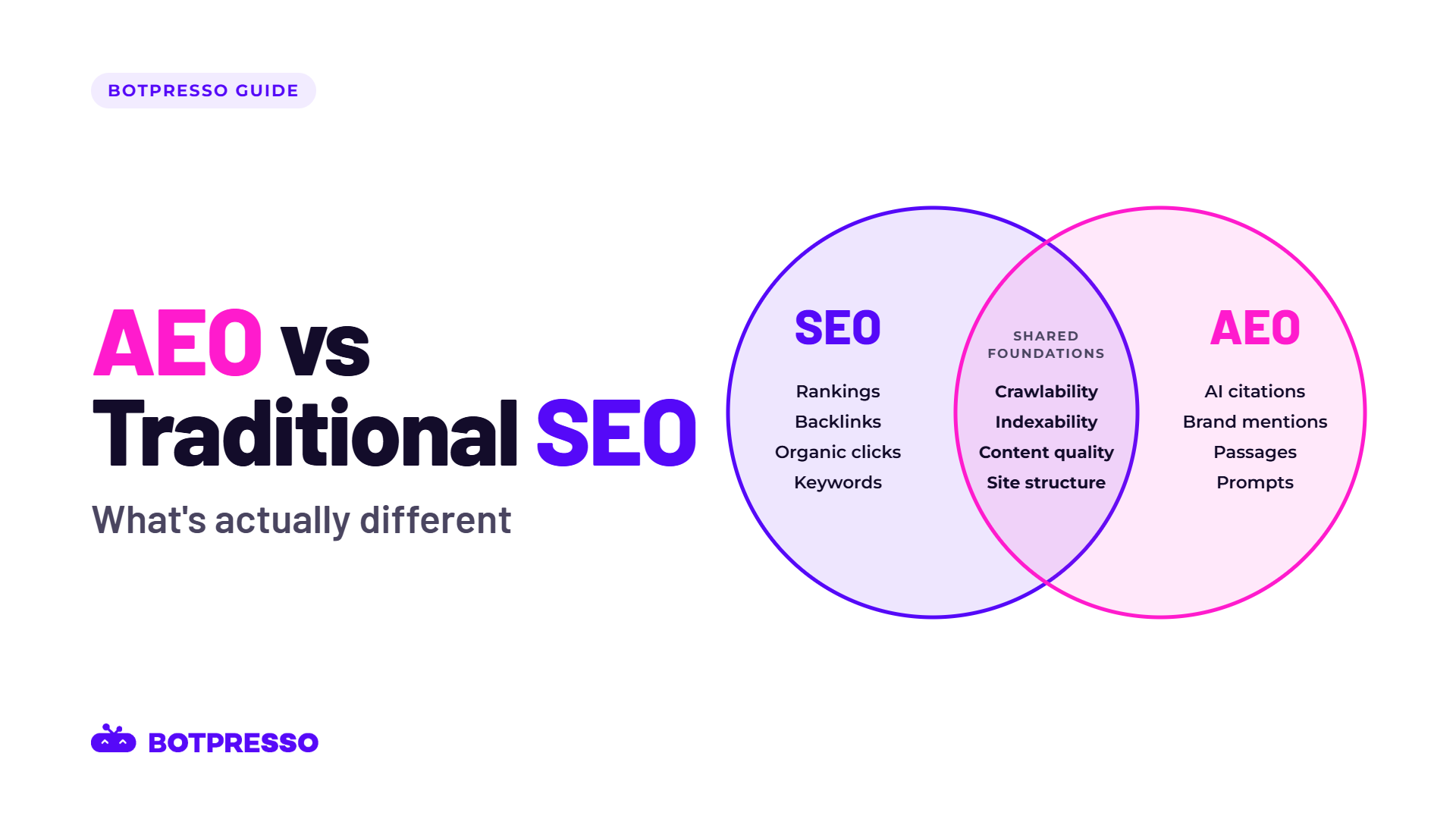
- AEO does not replace traditional SEO. The former helps get your brand cited in answer engines, while the latter helps your pages rank on search engines.
- Factors like crawlability, indexability, content quality, relevance, and site structure remain essential for visibility across traditional search and AI answer engines.
- For a successful AEO campaign, ensure AI search crawlers can access your website, structure your content for extraction, and maintain a consistent brand image across the web.
- To win with content on both SEO and AEO, focus on creating high-quality, evidence-backed content that is humanly edited, rather than publishing at scale.
AEO vs Traditional SEO: The short answer
Traditional SEO helps you dominate SERPs through keyword optimization, backlinks, content relevance, and technical mastery of your website.
AEO (Answer Engine Optimization), on the other hand, helps your brand/website get cited when users search answer engines like ChatGPT, Perplexity, and Google AI Overviews. The latter uses clear, answer-driven content, semantic relevance, and credible sources, among other things.
However, doing AEO does not mean you can throw out SEO. And even Google agrees with this! In Google’s own words, “The best practices for SEO continue to be relevant” even in the age of generative AI optimization.
Hence, creating helpful and reliable content, ensuring crawlability, indexability, and a healthy site structure are all necessary. The main difference lies in structuring information for AI extraction, proper crawl setup for AI crawlers, how fast updates to your content will be discovered by AI systems, and how your brand is being mentioned/references in credible external sources on the internet.
How answer engines pick sources (and why it matters)
There’s some overlap in how search engines and answer engines pick your content. Relevance, content quality, source credibility, etc., are common factors for both. But a search engine looks at keywords, backlinks, etc., for ranking a page.
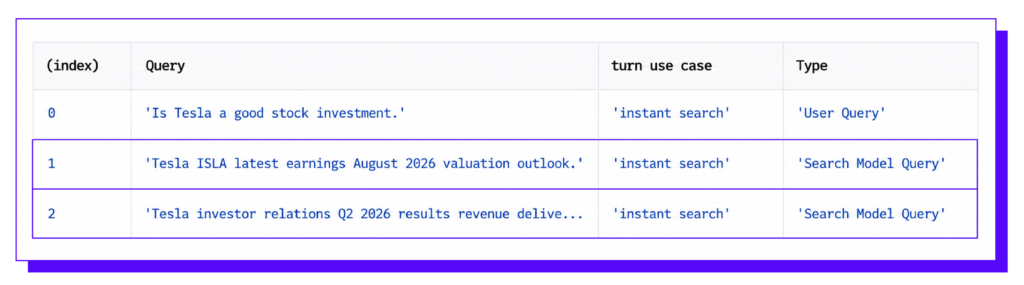
Answer engines analyse the user query and follow processes such as retrieval, grounding, query fan-out, and passage extraction.
Retrieval, grounding and query fan-out
- Grounding: Grounding is a way to connect AI-generated answers to real-world information to generate reliable responses. This involves verifying information from websites, search indexes, and databases, as opposed to just relying on pre-trained data.
- RAG: Retrieval-Augmented Generation (RAG) is a key method to achieve grounding. It involves retrieving relevant information from external sources and providing it to the AI model as context before it generates a response.
- Query Fan-out: This is a retrieval technique through which AI search platforms take a single user prompt or query and expand it into multiple related sub-queries. This, in turn, helps the system generate a more detailed answer. Hence, it does not treat the user’s input as one isolated search term. Rather, it uses fan-out technology to generate more related queries.
Ranking a page vs selecting a passage
- Traditional SEO ranks webpages: Let’s say a user searches for “best project management tools”. Google or any other search engine, for that matter, will display search results based on topical/keyword relevance and other metrics. The user then clicks a link and arrives on a web page to read about the query.
- An answer engine answers queries directly: Ask the same query to an answer engine, say ChatGPT. It will retrieve several webpages, identify information relevant to the best project management tools within those webpages, and combine information from these various sources to generate an answer for you.
The optimisation shift isn’t from pages to passages entirely; it’s from page-level visibility alone to making individual facts, explanations and sections clear, relevant and easy to interpret. Create well-structured content that answers questions directly, provides useful context, and supports claims with credible evidence.
Not every engine reads the same sources
Botpresso tracked 272 AI answers for 2 user prompts, across ChatGPT, Gemini, and Google AI Overviews. These prompts were run from India. We then counted every source each engine cited and, naturally, used.
“The three engines’ results barely overlapped”.
- ChatGPT took 86% of its citations from official platform documentation: Google Search Central, Bing Webmaster Tools and OpenAI’s help centre. Two domains, google.com and bing.com, made up 80% of everything it cited.
- Gemini, on the other hand, cited no official documentation at all. More than half of its citations (57%) went to four pages: a HubSpot article, a single Reddit thread, and a couple more brand websites.
- Google AI Overviews also cited no official documentation. It, in fact, drew from the widest pool: 99 different domains. And almost a third of its citations (32%) came from YouTube, LinkedIn, Medium, Quora, Instagram, and Reddit.
Source: Botpresso analysis of Peec AI data, 25 Aug to 8 Oct 2026.
AEO vs SEO at a glance
| Dimension | Traditional SEO | AEO |
|---|---|---|
| Target Platforms | Traditional search engines, such as Google Search and Bing. | AI answer experiences, such as ChatGPT Search, Google AI Overviews, and Perplexity. |
| Main Goal | Rank higher in search results, gain visibility and clicks, provide information, and drive conversions. | Increase the chances of being retrieved, cited, or mentioned in AI-generated answers; build brand awareness and visibility; drive website traffic and, eventually, conversions. |
| Core Strategy | Optimize pages for search intent, keyword relevance, authority, and technical performance. | Create relevant, reliable information that is discoverable, extractable, and useful for AI-generated answers. |
| Technical Foundation | Crawlability, indexability, rendering, site structure, and page experience. | The same SEO foundations, along with accessibility for relevant AI crawlers. |
| Ideal Content Format | Create comprehensive, search-intent-aligned pages with clear headings and internal links. | Content should have self-contained explanations, direct answers, well-defined concepts, and verifiable claims. Key sections should provide enough context to be independently extractable. |
| User Journey | Users browse search results and click through to webpages and websites. | Users receive synthesized answers directly. They may or may not click on cited sources. |
| Discovery Channels for Websites | Organic search results, featured snippets, image search, and other SERP features. | AI-generated answers, citations, source links, and brand mentions. |
| Success Metric | Rankings, impressions, organic CTR, clicks, and keyword visibility. | Citation rate, share of voice, brand mentions, and visibility across tracked prompts. |
| Traffic and Business Impact | Organic sessions, leads, sales, and conversions. | AI-referred sessions and conversions, alongside brand exposure that may bring in branded or direct traffic. |
| Type of Query | Keywords and queries with identifiable search intent across informational, navigational, and transactional categories. | Natural-language questions, conversational prompts, and multi-part queries that may require synthesizing information. |
| Authority and Trust | Relevant backlinks, reputation, topical relevance, and content quality. | Credible information, source reliability, brand mentions on external sources, and corroboration across sources. The precise signals vary by platform. |
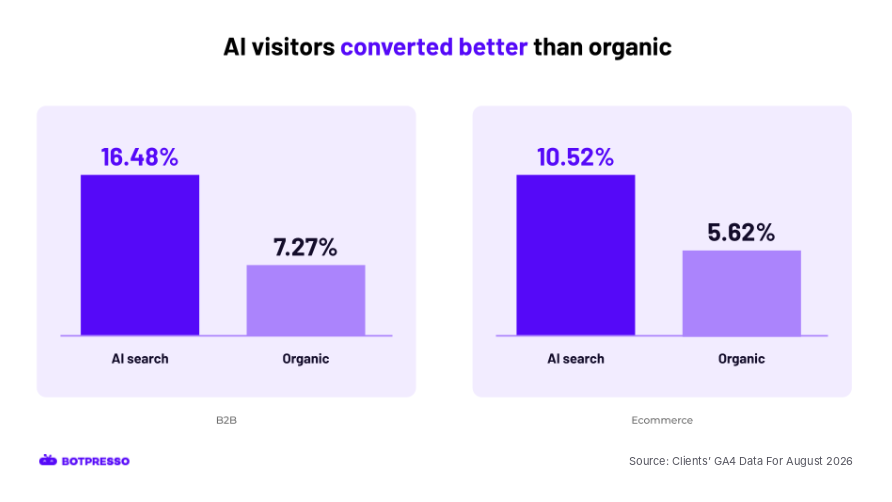
| Conversion Success | 7.27% per Botpresso’s B2B client data. | 16.48% per Botpresso’s B2B client data. AI search visitors converted 2.3x better. |
What’s the same at the technical level
Both Traditional SEO and AEO need you to get the basics right. A solid proof of this is Google revealing that a page must be indexed and snippet-eligible to appear in its AI features, a common requirement for your webpage to perform well on search engines. Bing, too, follows similar crawling and indexing requirements.
The technical-level requirements remain the same for both SEO and AEO.
- Crawability: Ensure your website is crawlable by search engines and AI bots.
- Indexability: Make sure your page is eligible to be indexed. This can support your eligibility for AI citation.
- Robots.txt: Ensure your domain’s robots.txt exists and returns the correct response.
- Sitemaps: This helps search systems discover URLs and identify content updates.
- Rendering: Helps both search engines and AI crawlers to access information without having to render the complex JS frameworks.
- Page Speed: A faster and responsive site can aid in both SEO and AEO.
A lot of these factors don’t directly guarantee AI visibility or a citation by AI search engines. However, Google rewarding best SEO practices in its generative AI features makes a strong case to continue them with AEO in mind as well.
What actually changes at the technical level
Despite commonalities, SEO and AEO diverge in a few places, with a few add-on practices required for AEO.
AI Crawler access
- AI search platforms use crawlers to discover and retrieve website content. Ensure your domain’s robots.txt and CDN/WAF rules don’t block the crawlers from accessing your website.
- AI crawlers generally fall into three types.
- Training crawlers (like GPTBot, ClaudeBot, Google-Extended, CCBot) collect web content in bulk to train large language models.
- Search/indexing crawlers (like OAI-SearchBot, PerplexityBot, Claude-SearchBot) build indexes that AI search engines use to find and cite sources in their answers.
- User-triggered agents (like ChatGPT-User, Claude-User, Perplexity-User) fetch a specific page in real time when someone asks an AI assistant a question that needs live information.
- Also, based on your business goals, you need to configure your AI crawler access.
Extractability
Your content must be optimized for extraction for AEO. This means making information easy to identify and understand. Front-load the direct answer; use descriptive, question-led headings where appropriate. Stating facts precisely is better, rather than burying them in heavy marketing language.
Before:
“We’re passionate about helping growing businesses unlock their full potential with our innovative platform.”
After:
“Founded: 2018
Product: X, a customer analytics platform
Best for: Mid-market businesses”
As shown in the second example, make key details more explicit.
Entity clarity
AI systems don’t simply rely on matching keyword strings. They process concepts and real-world things. Hence, using consistent names and descriptions for your brand, products, and services on your website and third-party sources is a key strategy.
Your goal is to reduce ambiguity about what your business offers.
Organization schema gives structured information about your business. The sameAs property can link to authoritative profiles that identify the same organization, such as its official social media pages.
However, it’s important to remember that these are supporting signals. They don’t guarantee an AI system will recognize or cite your brand.
4. Measurement
AEO measurements track your site’s visibility in AI answers using multiple signals:
- Prompt tracking: Possibly the most straightforward method. Test out a consistent set of relevant prompts for your brand or website and track results by platform and time.
- Search performance: Google Search Console provides reporting for generative AI features. Bing Webmaster Tools also offers AI Performance reports, which can show how your content is cited across supported Microsoft Copilot and other experiences.
- AI referral traffic: Analytics tools can help identify visits referred by AI platforms.
- Branded and direct traffic: Constantly monitor changes in branded searches and direct visits, as branded mentions can improve brand exposure.
The AEO technical checklist
A handy AEO checklist updated from time to time can help streamline your AI visibility efforts.
| Factor | Explanation |
|---|---|
| Crawlability | Check robots.txt, CDN or web application firewall (WAF) rules, and server responses. Verify the individual requirements of platforms and their crawlers. |
| Discoverability | Ensure important pages are included in XML sitemaps. HTTP Link headers can expose additional resources like llms.txt, AI or API catalogs, etc., but should complement, not replace, standard discovery methods. |
| Extractability | Use descriptive headings, direct answers, clear definitions, and explicit facts. Organize information into paragraphs, lists, or tables where appropriate. Use server-side rendering or prerendering where necessary. Test rendered HTML to ensure critical information is accessible. |
| Semantic HTML | Use meaningful HTML elements such as <main>, <article>, <section>, headings, and lists to establish document structure. This improves accessibility and helps systems interpret page content. Add relevant structured data where appropriate, ensuring it matches visible content. |
What this means for a growing brand
What to focus on first or more: SEO or AEO? This is a pressing question for many growing brands. Though even in the age of AI answers, SEO still comes first.
Why SEO still comes first
Key factors like crawlability, indexability, rendering, content quality/depth and external mentions that form the crux of SEO can all affect AEO as well.
Google explicitly asks sites to focus on “non-commodity” content that has a unique POV to rank in its generative AI infrastructure too. Its AI Overviews and AI Mode use its existing search infrastructure and ranking systems.
Hence, for a brand or website to be eligible for these features, a page must be indexed and eligible to appear in Google Search with a snippet.
By no means does great SEO alone guarantee AI citations, but a sound AEO strategy should be built around SEO fundamentals.
Add a ChatGPT question set on top of your keywords checklist
While SEO tells you what keywords your audience is searching for, AEO tells you what questions they are asking. Build a question set around your target audience and brand to optimize your strategy for AEO.
| Question category | Questions your content should answer |
|---|---|
| Brand fit | Who is [Brand] for? What problems does it solve? Who is it not suitable for? |
| Brand comparisons | [Brand] vs. [Competitor]: What are the key differences? How do their features, pricing, and use cases compare? |
| Alternatives | What are the best alternatives to [Brand]? When might another solution be a better fit? |
| Pricing | How much does [Brand] cost? What do its plans include? Are there additional fees or usage limits? |
| Industry or business fit | Is [Brand] suitable for [industry]? Does it meet the needs of businesses of different sizes? |
Hypothetically, if a 20-person startup is evaluating software for project management. Their team may search for the category more broadly first before evaluating a more narrow list of options.
Their questions will gradually become more specific, like:
- Which project management tools are best for a 20-person startup?
- Is [Brand] suitable for a small team, or is it designed for enterprise businesses?
- How does [Brand] compare with [Competitor] on pricing and collaboration features?
- What are the best alternatives if [Brand] is too expensive?
- Can [Brand] scale as the startup grows?
Your AEO strategy should answer these questions.
Off-site corroboration matters
Answer engines rely on your internet presence as a whole to assess the standing of your brand or website. Hence, merely ranking in top spots on search engines won’t help you make the cut for AI mentions.
Reviews of your brand, how active you are in communities, which publications feature you and consistency across your social profiles also matter. For example, mentions or staying active in Reddit thread discussions can give you an edge.
Another indispensable factor is your brand description. It must remain consistent across your own website and external websites too.
Original evidence beats volume game
Gone are the days of content farms for SEO. And they sure as hell don’t make the cut for AEO. Google encourages;
- Producing non-commodity content: While commodity content may target topics like “7 Tips for First-Time Homebuyers” and include generic advice. Non-commodity content targets more specific user queries like: “Why We Waived the Inspection & Saved Money: A Look Inside the Sewer Line” and speaks about it with expertise.
- Not to scale content without value: Google released a spam policy specifically about scaled content abuse. Scaled content abuse refers to publishing a large number of pages with thin content to hack search engines rather than providing helpful content to users.
- Not to create a page per fan-out query: Not every fan-out query requires a standalone page. Google explicitly warns against creating separate pages for every possible query variation. That too violates its scaled content abuse policy.
Local and e-commerce brands
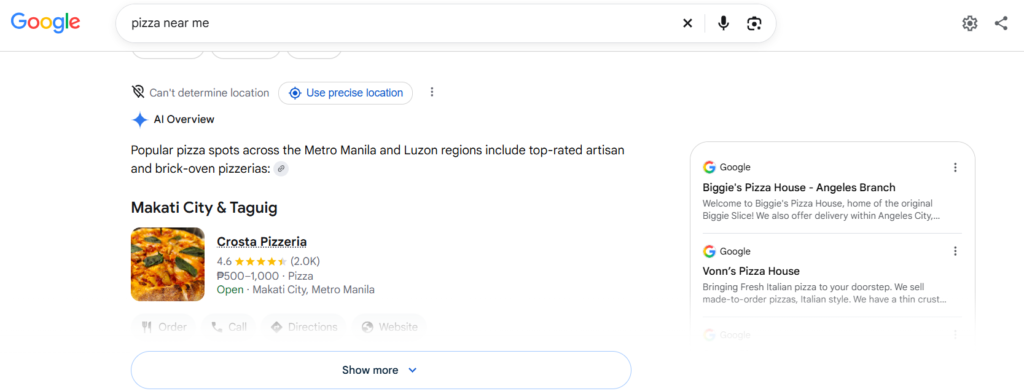
For local and e-commerce businesses, accurate business and product information is especially important. Google’s AI search guidance specifically recommends using Google Business Profile and Merchant Center to help eligible businesses and products appear in relevant search and AI experiences.
Prioritise three areas:
- Google Business Profile: Keep business details, categories, opening hours, location and services accurate. Encourage genuine customer reviews and respond appropriately. Google identifies relevance, distance and prominence as key factors in local rankings.
- Google Merchant Center: Maintain accurate product feeds, prices, availability, identifiers and product images. Ensure feed information agrees with the corresponding landing pages.
- Bing Places for Business: For businesses serving customers through physical locations, maintain accurate listings in Microsoft’s local search ecosystem as well.
A stage-based plan
Not every brand needs the same approach to Answer Engine Optimisation (AEO). A website struggling with indexation has different priorities from an established brand that ranks well but rarely appears in AI-generated answers. Here’s Botpresso’s framework for AEO based on the stage your brand is in:
Stage 1: Weak Foundation
Objective: Make your website accessible, discoverable and understandable.
Start by resolving crawlability and indexation issues, reviewing robots.txt and CDN restrictions, strengthening internal linking, and implementing appropriate structured data. Ensure your organisation’s name, products and business information are consistent across important pages and profiles.
Stage 2: Ranking but Not Getting Cited
Objective: Make important information easier to retrieve, interpret and reference.
Restructure priority pages with descriptive headings, direct answers, explicit facts and credible supporting evidence. Analyse relevant questions and query fan-outs to identify gaps in your existing coverage. Develop original resources, comparisons, case studies, and use-case pages that answer those questions meaningfully.
Stage 3: Cited Inconsistently
Objective: Strengthen corroboration and address source gaps.
Investigate why answer engines cite your brand for some questions but prefer competitors for others.
This is an indication to improve your brand’s wider presence. Review how you are viewed or if you are mentioned at all in relevant industry publications, credible third-party reviews, professional communities, forums, and other sources. These are places where a customer’s research journey can begin.
H2: AEO myths to ignore
The advent of AEO has brought several myths about how to approach it. The problem is that many recommendations are based on assumptions rather than documented evidence. Here are four myths brands should approach critically.
Myth 1: llms.txt helps your content get discovered
So far, no established evidence that adding an llms.txt file improves your AI visibility across platforms. Google has already stated that its search systems do not use llms.txt as a special signal for its AI Overviews or AI Mode.
llms.txt is intended to help AI systems navigate a website’s content. But its impact can vary across systems. Your priority should be making your pages crawlable, indexable, useful, and accurate.
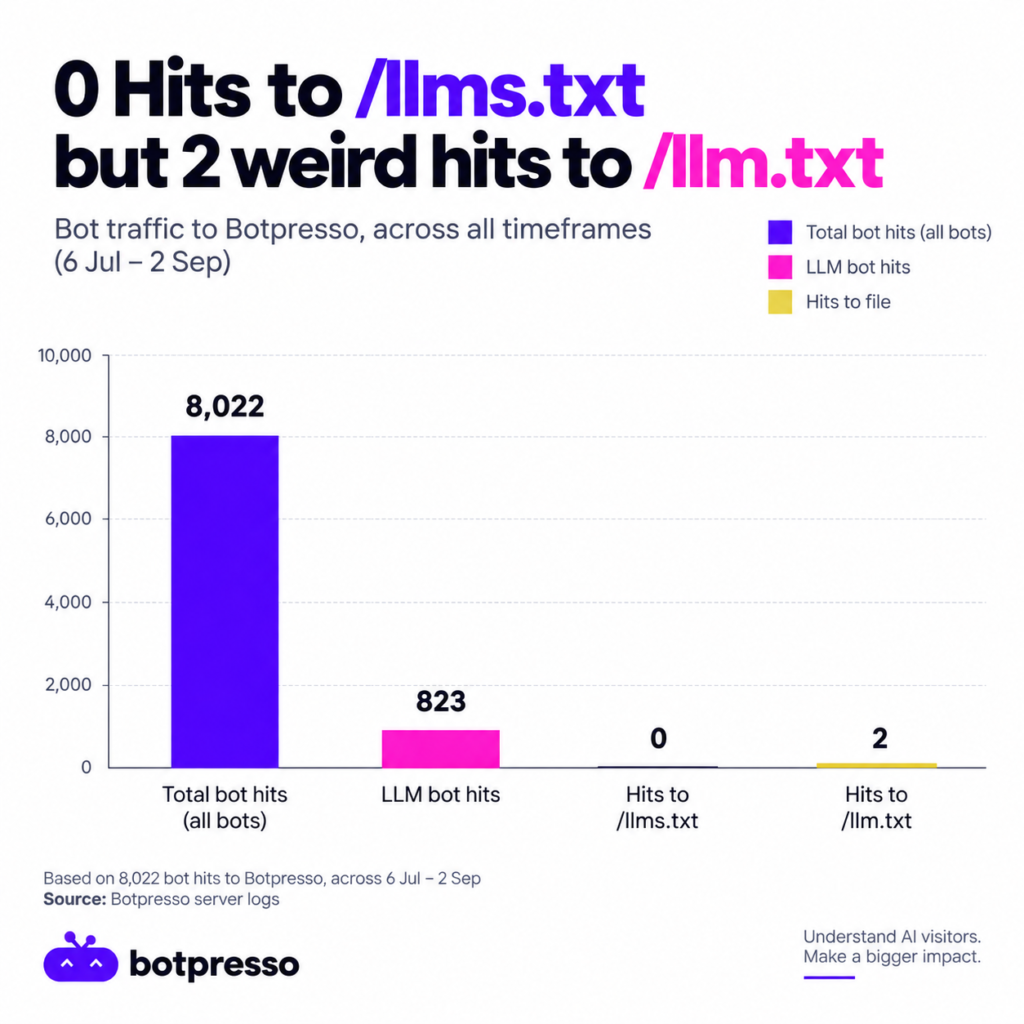
We tested this at Botpresso. We analysed our server logs, examining 8,022 bot requests. Of these, 823 were from LLM bots, yet we recorded zero hits to /llms.txt.
Myth 2: “AEO replaces SEO”
No, it does not!
AEO builds on top of SEO fundamentals. Google confirms that its AI search experiences rely on existing Search ranking and quality systems. Hence, don’t abandon technical accessibility, helpful content, a strong brand presence and other SEO practices.
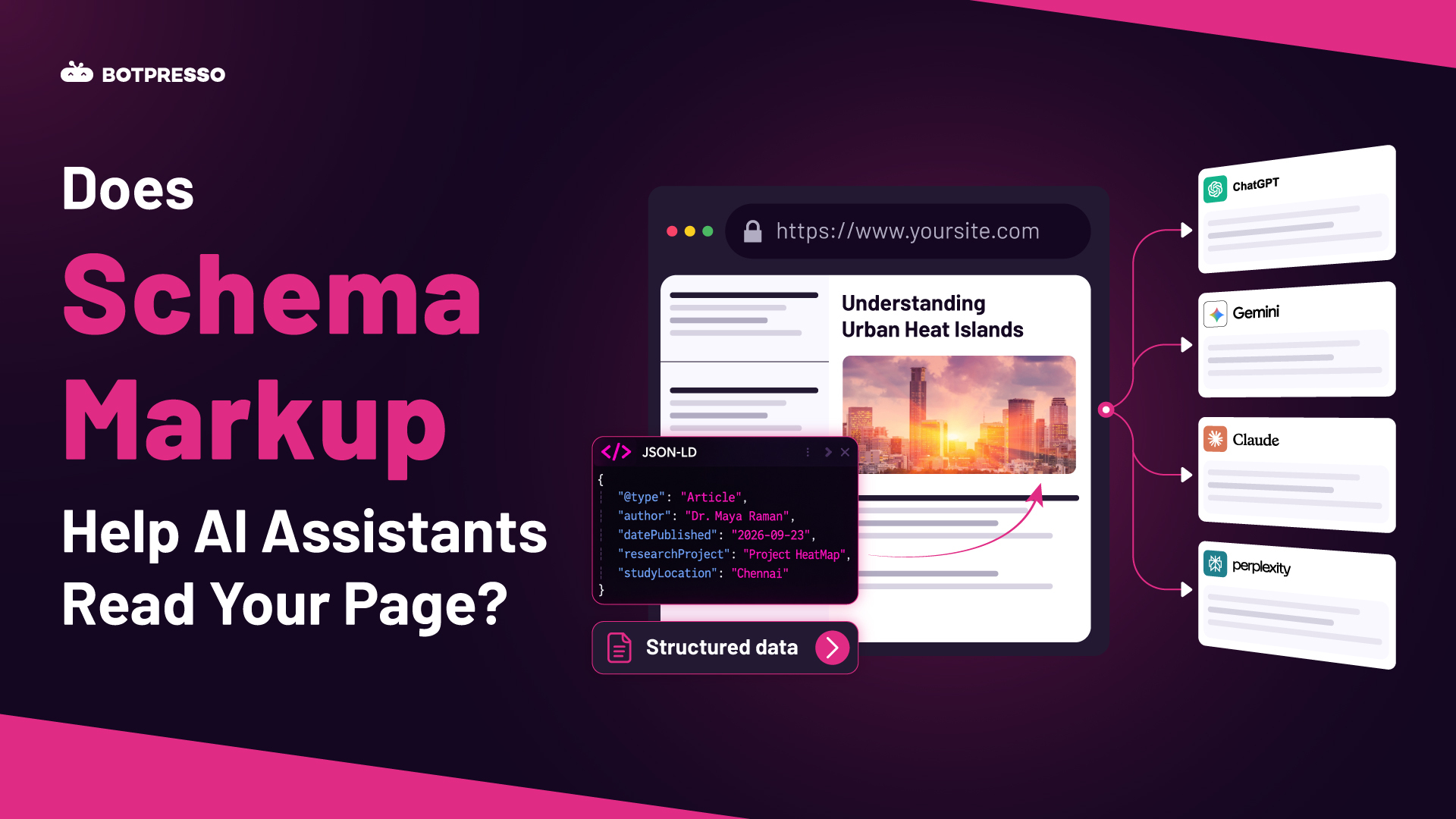
Myth 3: “Schema alone gets you cited”
Schema won’t save you if your website lacks trustworthy and high-quality content. Yes, structured data does help search engines interpret information about your page. It can even make you eligible for some rich results.
But schema markup alone does not guarantee rankings or AI visibility. We tested this as well at Botpresso. We created four test pages containing information exclusively in JSON-LD, hidden microdata or additional schema properties. We then asked ChatGPT and Claude to open the pages and retrieve those facts.
Neither assistant returned a single fact that existed only in the schema. Moving JSON-LD from the HTML <head> to the <body> made no difference. More concerningly, ChatGPT sometimes generated incorrect answers when the page lacked readable content, initially attributing those answers to our test pages.
Our findings align with an Ahrefs study of 1,885 pages that added JSON-LD. The study found no meaningful improvement in AI citations
H2: How much overlap is there really?
SEO and AEO clearly have a sizeable overlap, despite what industry debate sometimes suggests.
Botpresso’s position is that the overlap is the highest at the website level. However, off the website, AEO starts focusing more on brand visibility.
Consider your website as your home base. Users can check the positioning of your brand, pricing, locations and more. It is also a place to validate claims about your site.
Hence, technical and content fundamentals need to be the strongest.
But, with AEO becoming mainstream, your website is not your brand’s entire identity. Botpresso’s Peec data shows that about 32% of Google AI Overviews citations came from YouTube, LinkedIn, Medium, Quora, Instagram and Reddit. Meaning, AI systems form answers based on just your claims about your brand, but also on the basis of what others say about it.
FAQ
Is AEO just SEO with a new name?
No, AEO and SEO share foundations, like crawlability, indexability, content relevance and structure. But they focus on different goals. SEO aims to rank your site higher on SERP, while AEO aims to get your brand or site cited or mentioned on AI platforms as a response to a user’s query.
Do I need llms.txt for AEO?
No. Google explicitly states that llms.txt is not required for its AI search features. Botpresso’s server-log experiment also recorded zero hits to /llms.txt, highlighting the need to test claims rather than assume benefits.
Does schema markup help AI citations?
Schema helps search engines interpret structured information, but it does not guarantee AI citations. Botpresso’s experiment found that ChatGPT and Claude could not retrieve facts available only in schema during live page fetches.
How do I know if AI engines cite my brand?
Test out prompts or questions that are most relevant to your target audience on AI answer engines. Track how often your brand is mentioned or cited in these responses and which of your URLs appear. Also monitor how often these results change.
Should a small team do SEO or AEO first?
Always start with SEO first, as AEO also favours SEO basics like crawlability, indexability, content quality, etc. AEO can be built once your SEO foundations are set and running.
What’s the difference between AEO and GEO?
AEO stands for Answer Engine Optimization, while GEO is Generative Engine Optimization. They are both connected to improving your brand’s visibility in AI-generated answers.